
- Posts: 32
- Thank you received: 0
what makes a good "ice" ski
- Marco
-

- User
-

Less
More
16 years 8 months ago #188285
by Marco
Replied by Marco on topic Re: what makes a good "ice" ski
All the above, but also don't discount lateral rigidity of the boot/binding/ski interface as a factor...
Please Log in or Create an account to join the conversation.
- Robie
-
- User
-
Less
More
- Posts: 554
- Thank you received: 0
16 years 8 months ago #188292
by Robie
Replied by Robie on topic Re: what makes a good "ice" ski
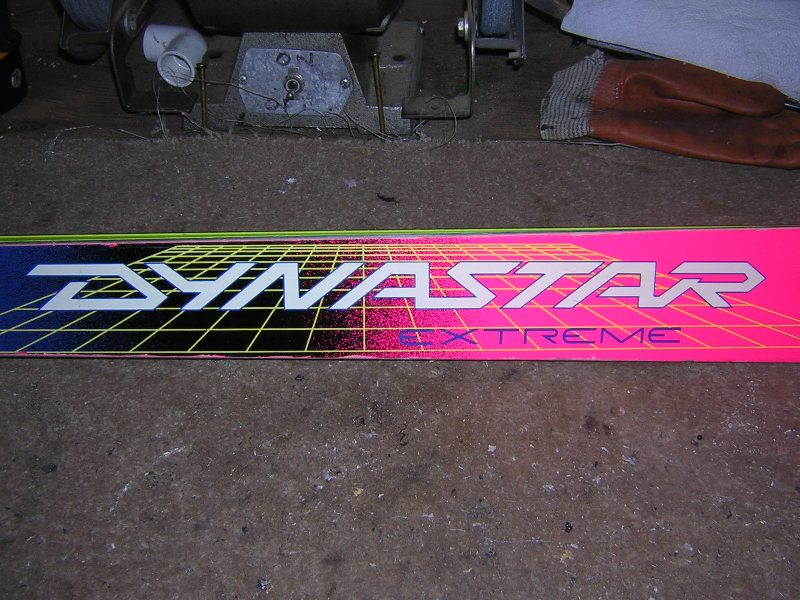
"Dynastar Vertical Assualt Extremes"
stiff, narrow and sharp and used with skill .
I have the skis but not the skill!
stiff, narrow and sharp and used with skill .
I have the skis but not the skill!
Please Log in or Create an account to join the conversation.
- gregL
-

- User
-
Less
More
- Posts: 669
- Thank you received: 0
16 years 8 months ago - 16 years 8 months ago #188296
by gregL
Replied by gregL on topic Re: what makes a good "ice" ski
a. The right balance of longitudinal stiffness/camber/sidecut (or lack of sidecut)/skier weight to maintain a consistent pressure for the full length of the ski edge, plus
b. Enough torsional stiffness to keep the extremities of the ski from twisting under load
You wouldn't think it would be that hard to combine reasonable edgehold with deep snow capability, but softening up the forebody and tail of the ski enough to make manky snow skiing easy for the majority often means giving up grip there. Likewise building a bunch of torsional rigidity into a ski can make turn initiation tricky, requiring more speed/unweighting/commitment to maneuver - not necessarily a selling point for the masses.
I haven't skied any Voiles, but I'm guessing they're aiming at "effortless" deep snow performance and don't expect their customers to run into much "ice." And yes, as Lowell mentions, a relatively narrow ski (this definition seems to change at the rate of about 4-5mm a year, but I'm talking about waist width that more or less lines up with the outer shell of the boot) helps as well.
I don't really like to generalize along brand lines, but I've long felt that Atomic and Trab both tend to build hard snow performance into their products up and down the line - of course, one is run by a bunch of ex-alpine racer people (sure they're backcountry skis, but you might just come across a GS course on your way down to the village) and the other by people who think that skiing fall-you-die terrain with F1's and 850 gram skis is normal.
b. Enough torsional stiffness to keep the extremities of the ski from twisting under load
You wouldn't think it would be that hard to combine reasonable edgehold with deep snow capability, but softening up the forebody and tail of the ski enough to make manky snow skiing easy for the majority often means giving up grip there. Likewise building a bunch of torsional rigidity into a ski can make turn initiation tricky, requiring more speed/unweighting/commitment to maneuver - not necessarily a selling point for the masses.
I haven't skied any Voiles, but I'm guessing they're aiming at "effortless" deep snow performance and don't expect their customers to run into much "ice." And yes, as Lowell mentions, a relatively narrow ski (this definition seems to change at the rate of about 4-5mm a year, but I'm talking about waist width that more or less lines up with the outer shell of the boot) helps as well.
I don't really like to generalize along brand lines, but I've long felt that Atomic and Trab both tend to build hard snow performance into their products up and down the line - of course, one is run by a bunch of ex-alpine racer people (sure they're backcountry skis, but you might just come across a GS course on your way down to the village) and the other by people who think that skiing fall-you-die terrain with F1's and 850 gram skis is normal.
Please Log in or Create an account to join the conversation.
- Alan Brunelle
-
- User
-
Less
More
- Posts: 260
- Thank you received: 0
16 years 8 months ago #188299
by Alan Brunelle
Replied by Alan Brunelle on topic Re: what makes a good "ice" ski
What Lowell said.
If you want that I got it! I just posted on Yard Sale a pair of Grande Vitesse.
specs: Black Diamond Grand Vitesse 72/58/65 1991 - 1992 stiff, hardpack
Much narrower and they would be just edges! Stiff as a can be.
More seriously, though, race skis are designed for edging on hard snow/ice. It is not uncommon for a race course to be hardened in preparation by the addition of water in cold conditions or more commonly with the use of rock salt in warm or powder conditions to stiffen and ice up the snow. Just pick the radius of turn you want and buy a slalom, GS or SG ski. A ski instructor once told me that the best race ski is one that has essentially no torsional flex (for edging on the hard stuff) yet very flexible longitudinally, so that the ski readily forms an arc for carving. They do exist, though in practice, the adult race stock stuff is not as longitudinally as flexible as skis meant for powder, etc. That "flexibility" is all relative to the expected skier who will flex the ski. Since it is an aggressive racer doing the flexing, you wouldn't need the flex of a powder ski. Most race skis are laminate construction, though Atomics, I believe are cap, and they are all as heavy as can be. Atomics are probably the lightest. Not sure about this years models. Check for used gear on some of the local race club sites such as SPAC, CMAC for Seattle or research wherever you are from.
On the other hand you are talking blue ice. I know blue ice from the days of skiing on eastern Massachusetts "snow". That "snow" (often man made) was fair enough, but the thin cover usually meant that springs from below would feed true blue ice surprises. I don't think anyone would really want to ski that stuff. The technique taught to most is that when you hit a patch of that stuff flatten the ski, go for the hopefully short ride to the next edge-able snow and then start turning again. Of course that helps if the patch is short and there is relief after you exit!
Alan
If you want that I got it! I just posted on Yard Sale a pair of Grande Vitesse.
specs: Black Diamond Grand Vitesse 72/58/65 1991 - 1992 stiff, hardpack
Much narrower and they would be just edges! Stiff as a can be.
More seriously, though, race skis are designed for edging on hard snow/ice. It is not uncommon for a race course to be hardened in preparation by the addition of water in cold conditions or more commonly with the use of rock salt in warm or powder conditions to stiffen and ice up the snow. Just pick the radius of turn you want and buy a slalom, GS or SG ski. A ski instructor once told me that the best race ski is one that has essentially no torsional flex (for edging on the hard stuff) yet very flexible longitudinally, so that the ski readily forms an arc for carving. They do exist, though in practice, the adult race stock stuff is not as longitudinally as flexible as skis meant for powder, etc. That "flexibility" is all relative to the expected skier who will flex the ski. Since it is an aggressive racer doing the flexing, you wouldn't need the flex of a powder ski. Most race skis are laminate construction, though Atomics, I believe are cap, and they are all as heavy as can be. Atomics are probably the lightest. Not sure about this years models. Check for used gear on some of the local race club sites such as SPAC, CMAC for Seattle or research wherever you are from.
On the other hand you are talking blue ice. I know blue ice from the days of skiing on eastern Massachusetts "snow". That "snow" (often man made) was fair enough, but the thin cover usually meant that springs from below would feed true blue ice surprises. I don't think anyone would really want to ski that stuff. The technique taught to most is that when you hit a patch of that stuff flatten the ski, go for the hopefully short ride to the next edge-able snow and then start turning again. Of course that helps if the patch is short and there is relief after you exit!
Alan
Please Log in or Create an account to join the conversation.
- Aleksey
-
Topic Author
- User
-
Less
More
- Posts: 34
- Thank you received: 0
16 years 8 months ago #188300
by Aleksey
Replied by Aleksey on topic Re: what makes a good "ice" ski
How do dampness and longitudinal stiffness equate in the same ski? The concept makes sense, you would want something damp for the firm, uneven surface. And something stiff too. But how do you get that in the same ski?
Also, I am looking for a mountaineering ski primarily and am opting to carry a little more weight in order to have more stability in mixed conditions.
Thanks for all the input, its given me lots to think about
Also, I am looking for a mountaineering ski primarily and am opting to carry a little more weight in order to have more stability in mixed conditions.
Thanks for all the input, its given me lots to think about
Please Log in or Create an account to join the conversation.
- Alan Brunelle
-
- User
-
Less
More
- Posts: 260
- Thank you received: 0
16 years 8 months ago #188303
by Alan Brunelle
Replied by Alan Brunelle on topic Re: what makes a good "ice" ski
I am not sure how dampness is achieved in a ski. I think that dampness and longitudinal flex can be independently varied. They are two different properties.
I am assuming that a damp ski is one that inherently reduces resonance when "rung" by terrain impacts, etc. Sort of like how shock absorbers on a car rapidly quell bouncing.
My guess is that the core material of the ski is critical and also the adhesives between laminate layers may play a big part.
I would think that this property is critical for good ice performance for two reasons: First, icy conditions will greatly increase the type of forces on the ski that could initiate resonance. Second, resonance is going to greatly affect the amount of time the ski edge remains in contact with the ice. To be sure, on true ice there will be no other part of the ski in contact with the ice than the edges during the control part of any turn.
I would think that another consideration would be that an ice ski should be much shorter than for normal conditions. The reason I say this is that a short ski will increase the force per length on the biting edge and therefore increase the penetration of the edge into the ice. In any case, a long ski would certainly offer no other benefit when skiing on ice. One assumes that your objective is to have control.
Alan
I am assuming that a damp ski is one that inherently reduces resonance when "rung" by terrain impacts, etc. Sort of like how shock absorbers on a car rapidly quell bouncing.
My guess is that the core material of the ski is critical and also the adhesives between laminate layers may play a big part.
I would think that this property is critical for good ice performance for two reasons: First, icy conditions will greatly increase the type of forces on the ski that could initiate resonance. Second, resonance is going to greatly affect the amount of time the ski edge remains in contact with the ice. To be sure, on true ice there will be no other part of the ski in contact with the ice than the edges during the control part of any turn.
I would think that another consideration would be that an ice ski should be much shorter than for normal conditions. The reason I say this is that a short ski will increase the force per length on the biting edge and therefore increase the penetration of the edge into the ice. In any case, a long ski would certainly offer no other benefit when skiing on ice. One assumes that your objective is to have control.
Alan
Please Log in or Create an account to join the conversation.